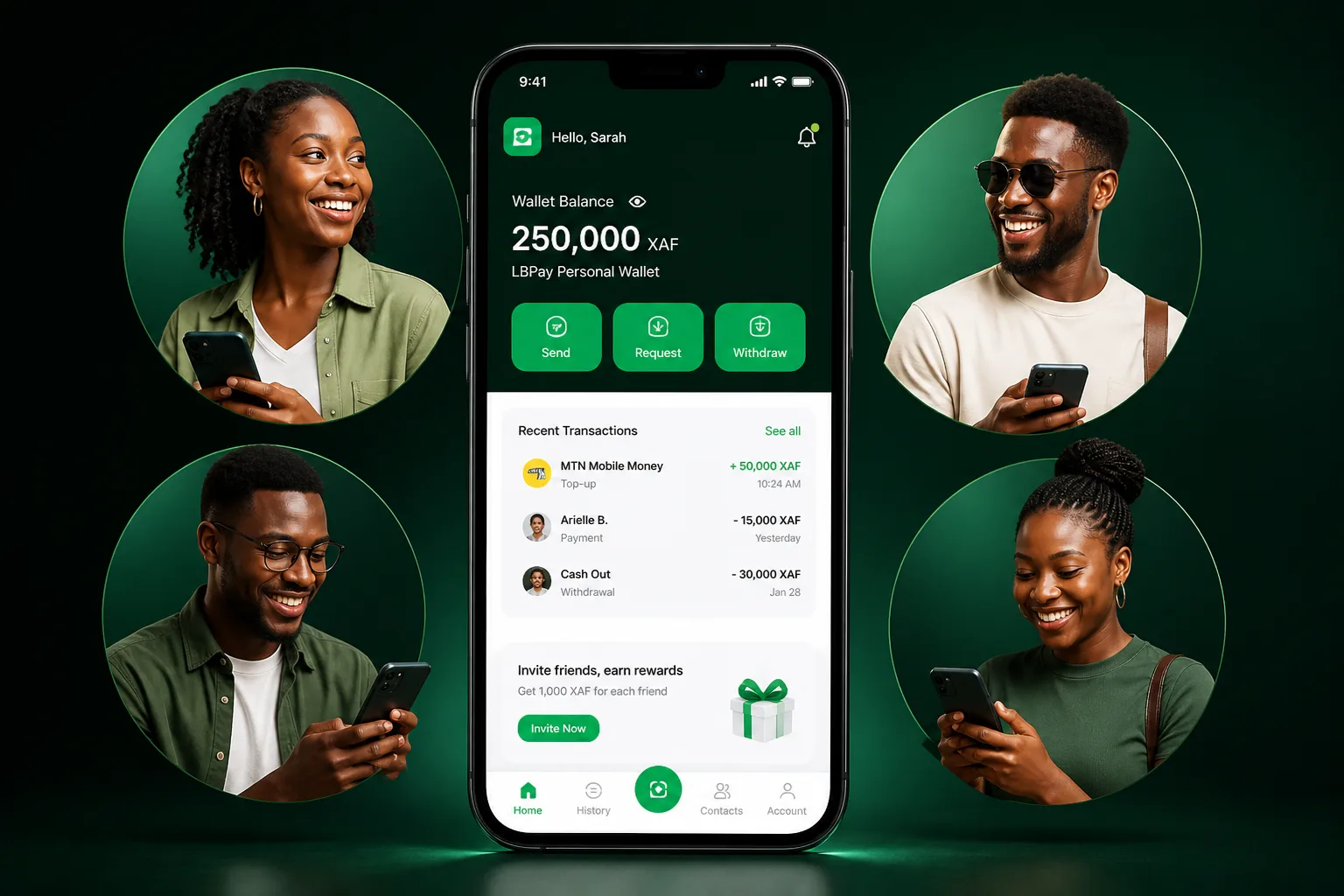
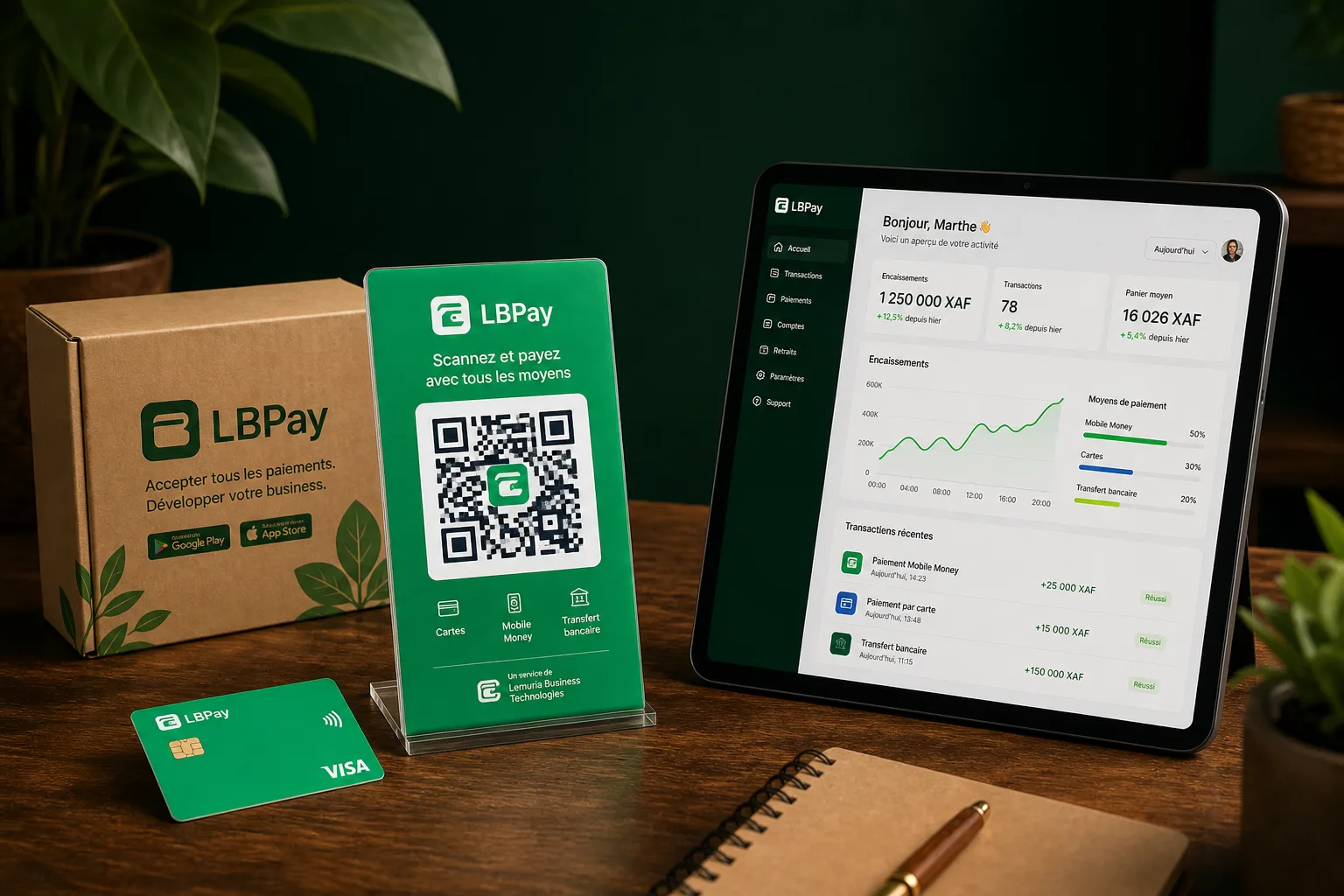
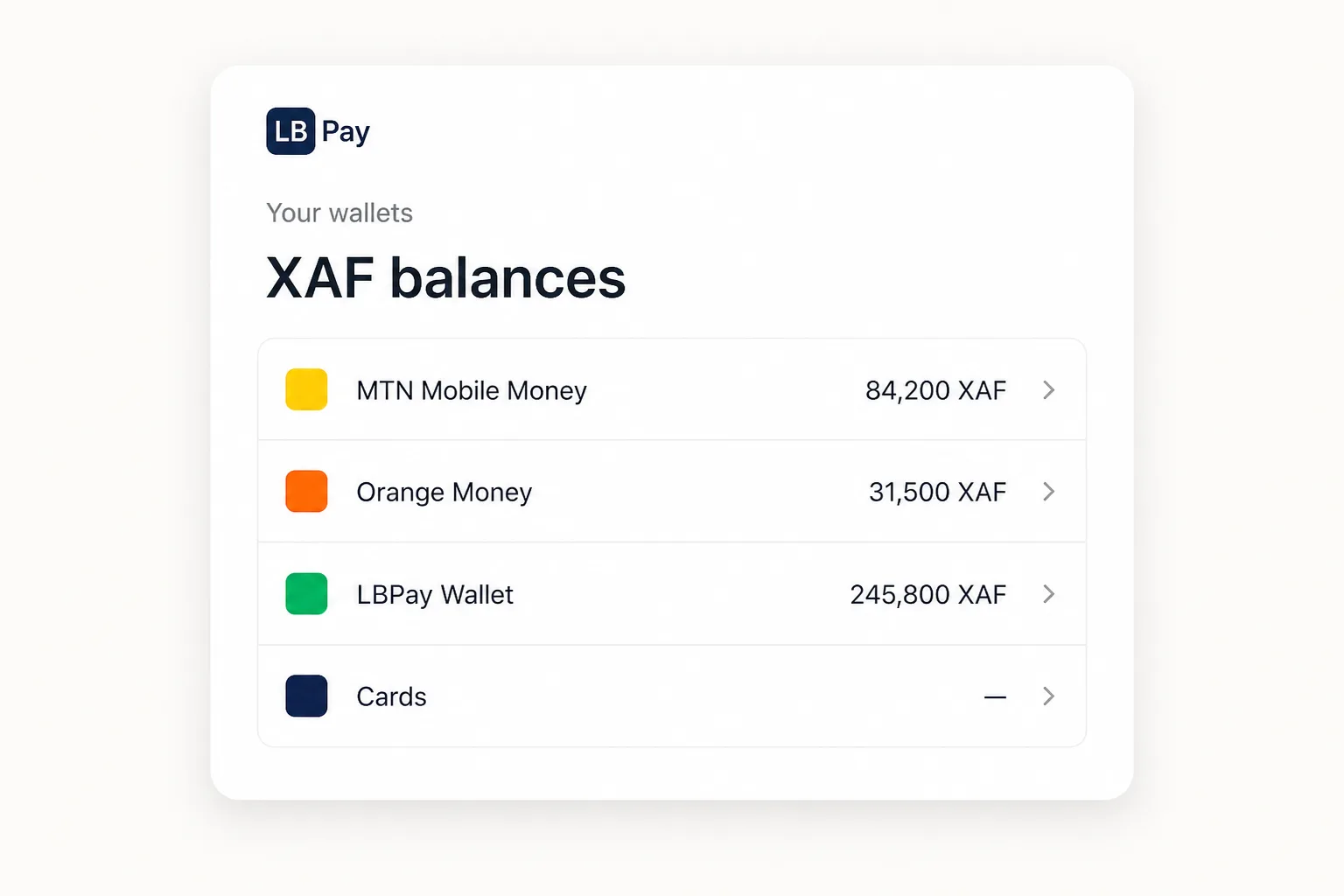
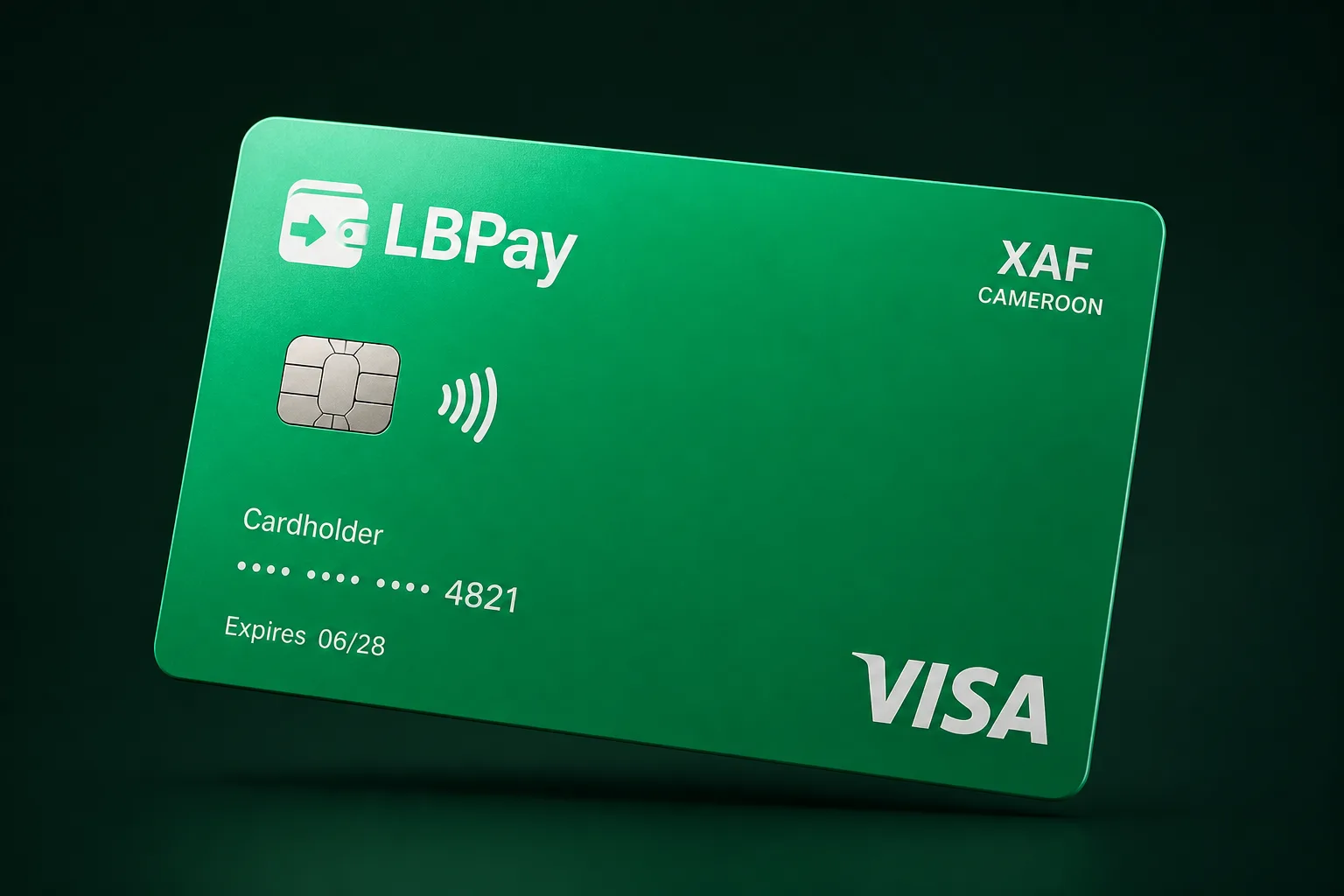
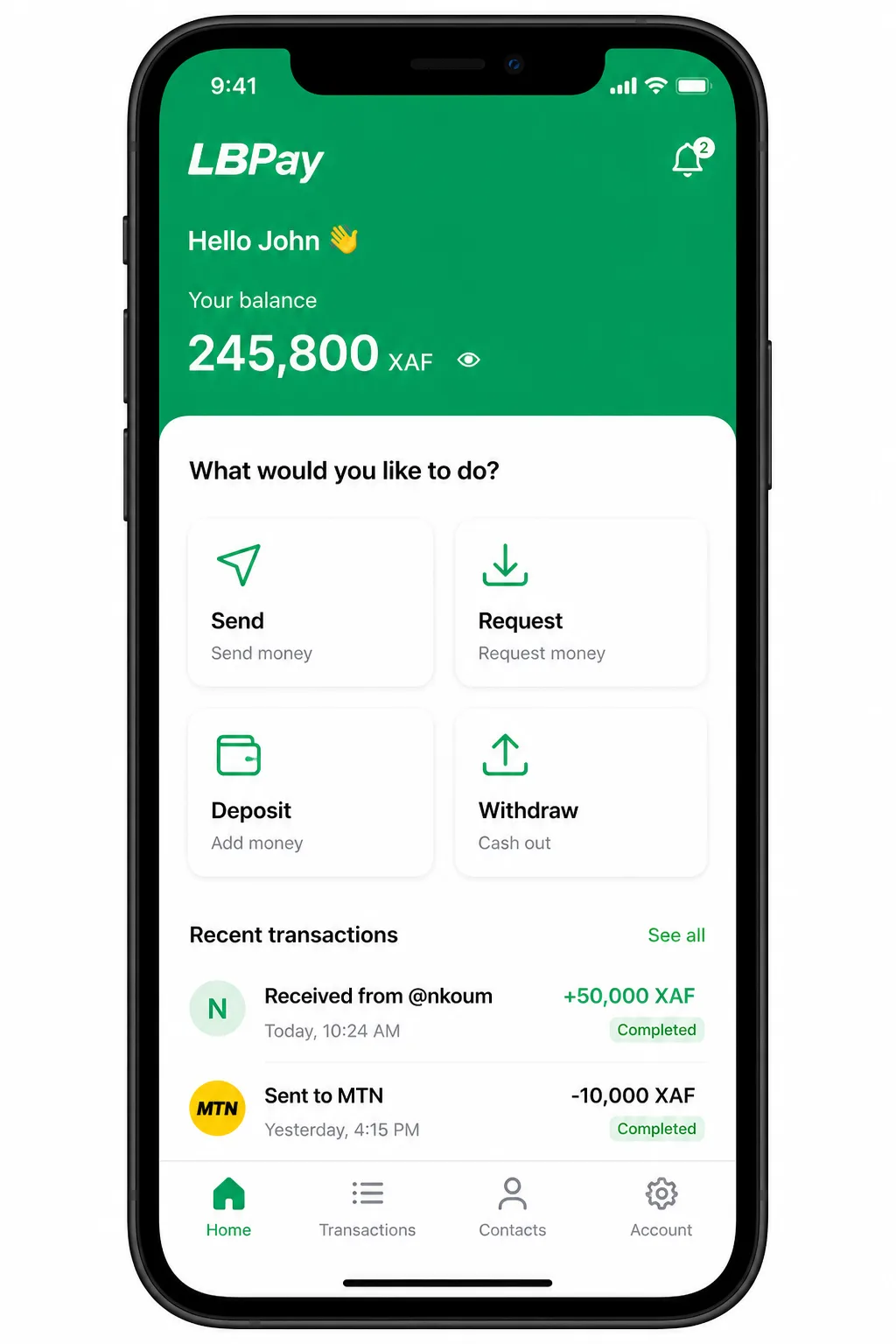
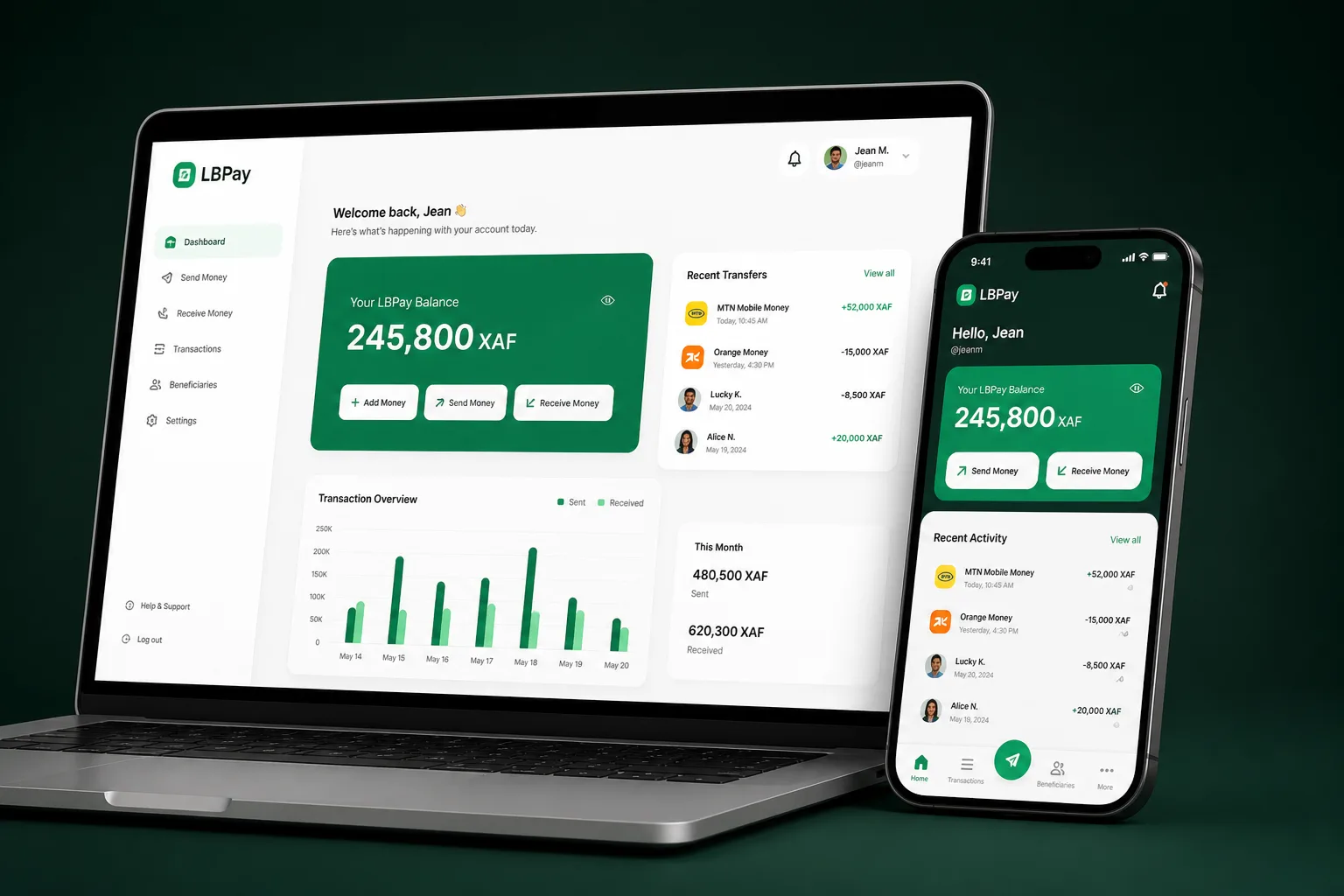
LBPay is a Cameroon payment and wallet platform. People send and receive XAF, businesses collect with QR and payment links, and developers call a payments API. MTN Mobile Money, Orange Money, cards, and the LBPay wallet are rails underneath the product.
New: savings pots and transfers across Africa
Send, save, and reach 10 countries.
One XAF wallet with an @handle. Send to MTN and Orange, save daily, weekly or monthly with a penalty that keeps you honest, and pay people in Nigeria, Ghana, Senegal and across CEMAC.
- 0 XAF
- Wallet to wallet
- 2.5%
- Send abroad
- 10
- Countries
Works with
MTN Mobile MoneyOrange MoneyCardsLBPay wallet
Fast and secure money transfers for people and businesses.
Fast & affordable
Wallet to wallet is instant. No waiting on a float agent.
Savings with teeth
Daily, weekly or monthly pots. Miss a cycle and the penalty you chose is cut.
Cameroon first, Africa next
XAF at home. Naira, cedi and CFA delivered in 9 more countries.
Extra clear fees
Deposits 1.5%. Withdrawals 2.5%. MTN ↔ Orange is 3.5%. Wallet transfers are free.
Secure & trusted
Email OTP, a 4-digit PIN, and a ledger that posts every move.
Savings pots
Save every day. Or pay the price you set yourself.
Pick a rhythm — daily, weekly or monthly — and an amount. Every time the cycle lands and you have not saved, LBPay cuts a small penalty from your wallet. You choose how much it stings, from 1% to 25%. Most people leave it at 5%.
- Streaks and a progress ring keep the pot in front of you
- Auto-save pulls the amount the moment it falls due, so you never miss
- Withdraw any time. Reach the goal and collect it all in one tap
- Penalties are transparent, capped, and listed in your history

🏠
Due todayRent, January
2 500 XAF every day
In the pot
47 500 / 75 000 XAF
63% there11 days to go
Save 2,500 nowAuto-save on
Getting started
It is simple to start using LBPay.
- 01Create accountName, email, phone, password. Confirm with a 6-digit code.
- 02Set your PINFour digits. You use it on every send, deposit, and withdrawal.
- 03Send moneyA number or an @handle. LBPay picks the rail underneath.
Across Africa
Send XAF from Douala. They get naira in Lagos.
One flat 2.5% fee, the rate locked when you confirm, and delivery to Mobile Money or a bank account in local currency. Receiving is even simpler: share your @handle and money from any of these countries lands in XAF.
🇬🇦Gabon
1 XAF = 1 XAF
🇹🇩Chad
1 XAF = 1 XAF
🇨🇬Congo
1 XAF = 1 XAF
🇨🇫CAR
1 XAF = 1 XAF
🇬🇶Eq. Guinea
1 XAF = 1 XAF
🇳🇬Nigeria
1 XAF = 2.3166 NGN
🇬🇭Ghana
1 XAF = 0.0198 GHS
🇨🇮Ivory Coast
1 XAF = 1 XOF
🇸🇳Senegal
1 XAF = 1 XOF
Rate locked at confirm Minutes to Mobile Money
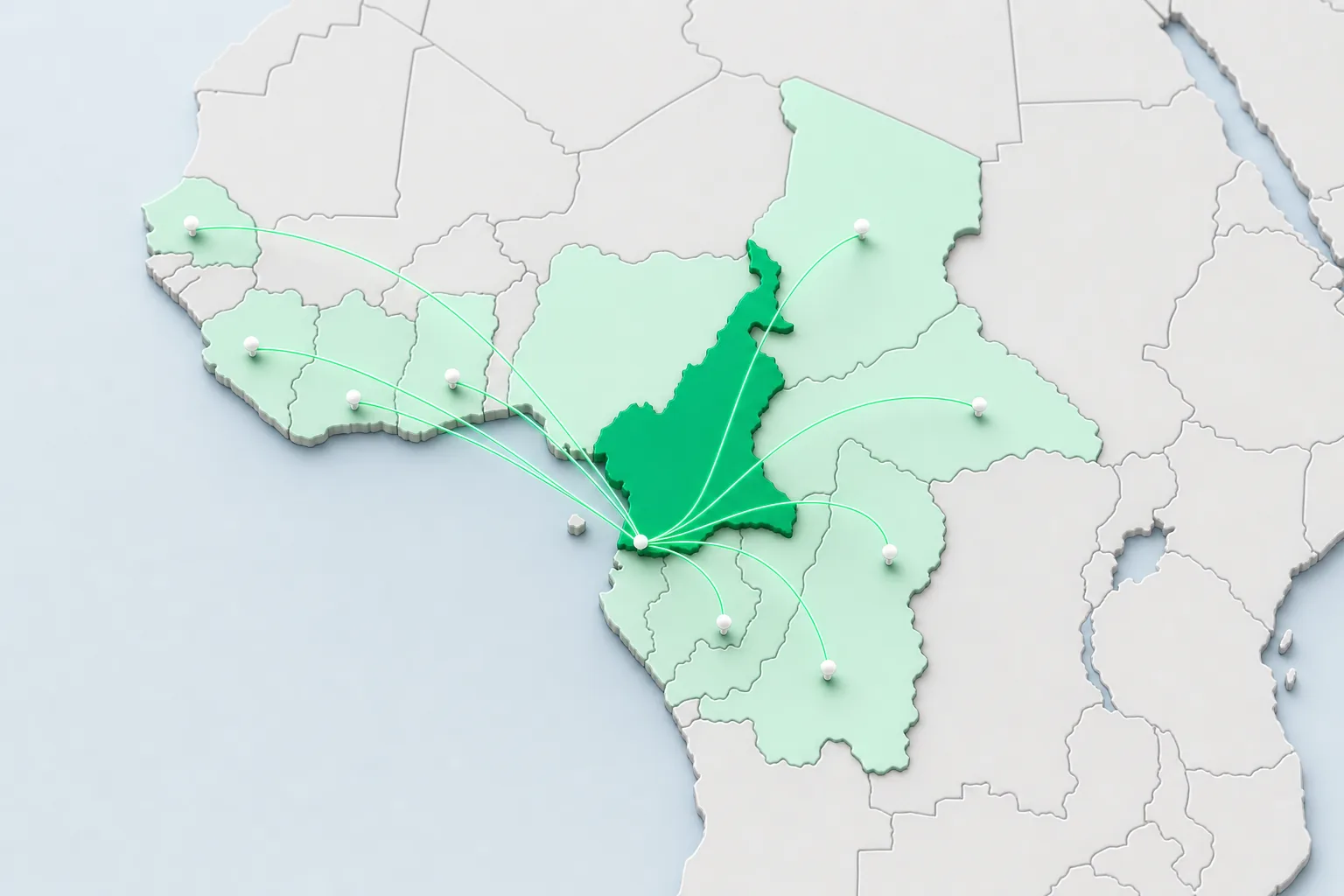
And every corner of Cameroon
- Douala
- Yaoundé
- Bafoussam
- Bamenda
- Garoua
- Buea
Built for how people already move cash at home, now reaching the neighbours.
Common questions.
Wallet, checkout, and the payments API, answered without the jargon.
Yes. You send to a phone number or an @handle. If the money stays on LBPay it is an internal wallet transfer. If it must leave to MTN or Orange, LBPay runs a disbursement on the payment rail.
Developers apply from Profile. After approval, sandbox and live keys appear in the Developer Portal. The API covers payments, payouts, payment links, webhooks, and balance.
Businesses use one checkout for MTN Mobile Money, Orange Money, cards, and LBPay wallet. Customers can pay by QR code or a payment link. The merchant does not integrate each network separately.